
Report #10 Outreach: the first crucial step
Explore the critical role of street outreach in addressing homelessness in Portland. This report by PDX Voice examines how building trust and consistent engagement serve as the essential first steps in connecting vulnerable individuals with behavioral health services, emergency shelter, and long-term housing solutions. Learn why effective outreach is the foundation for recovery and systemic change in our community.
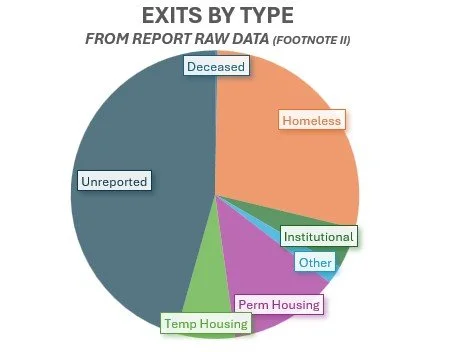
Report #9 How (not) to Measure Accountability
A rigorous analysis of shelter performance is critical for both the unhoused and the taxpayer. In Report #9, PDX Voice examines the County’s recent attempt at a cost-benefit analysis, revealing why current metrics fail to measure true progress. We explore the "hidden" costs of different shelter types and recommend a new path toward individual recovery plans and standardized service evaluation.

Report #8: Unified Leadership: Prerequisite for a Successful Homeless Policy
In our latest report, we examine how the division of power between the City, County, Metro, and the State has created a landscape of "incoherence in strategy and duplication of effort." From the "absurd" waste of the County handing out tents while the City sweeps them, to a chaotic shelter system with no centralized database, the lack of unified leadership is failing both the unhoused and the taxpayers.
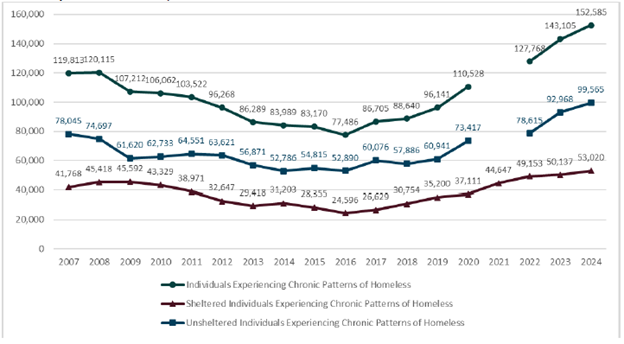
Report #7: Can Housing First Beat Fentanyl, Meth, and Psychoses? The Crisis of Chronic Homelessness and the Case for Heterodox Housing Policy
The crisis of chronic homelessness is accelerating, fueled by the widespread availability of fentanyl, psychosis-inducing methamphetamine, and severe mental illness. While "Housing First" (HF) remains the dominant strategy for addressing this challenge, a close examination of the evidence reveals that its reputed benefits for mental health and substance abuse disorder are often exaggerated and show no more efficacy than other treatment models for achieving recovery. This report argues that policymakers must move beyond HF as the only solution and instead adopt a heterodox housing policy that strategically combines HF with "Treatment First" (TF) options to better tailor interventions to individual circumstances, which is the only way to successfully fight the symbiotic scourges of chronic homelessness, mental illness, and addiction.

Report #6: Review of CCC’s Engaged Social Housing
On Sept. 10, 2025, Central City Concern released “Engaged Social Housing.” CCC calls for a new model integrating behavioral health treatment and housing to better support recovery and reduce homelessness.

Report #5: Behavioral Health and Drug Addiction..The Ignored Stepchild of Homeless Services
Despite massive spending, Multnomah County and Portland underfund addiction treatment and mental-health care for the homeless. This post exposes policy gaps that keep chronically homeless people on the streets and offers data-driven insights.

Report #4: Further Thoughts on the Spending on Homelessness in Multnomah County
Multnomah County’s Homeless Spending Far Exceeds Official Estimates
Recent reports reveal that homelessness spending in Multnomah County for FY2024 may be far higher than previously reported. While ECOnorthwest estimated $501 million in spending, the Portland Voice calculates a total closer to $838 million—rising to $978 million when factoring in affordable housing costs. Differences in methodology, including whether to count public safety, emergency healthcare, and behavioral health, explain much of the gap. With per-resident spending reaching as high as $1,229—over double that of New York City—the article raises pressing questions about how these funds are allocated and whether the current approach is cost-effective.

Report #3: Shelter, Housing Assistance, and Supportive Housing
Are we spending smarter to end homelessness, or just spending more?
Multnomah County now spends over $53,000 per homeless individual per year, yet thousands remain unsheltered. This report breaks down the costs and effectiveness of shelter types, housing assistance, and supportive housing.
📊 Learn why better coordination—not just more funding—is the key to lasting solutions in Report #3
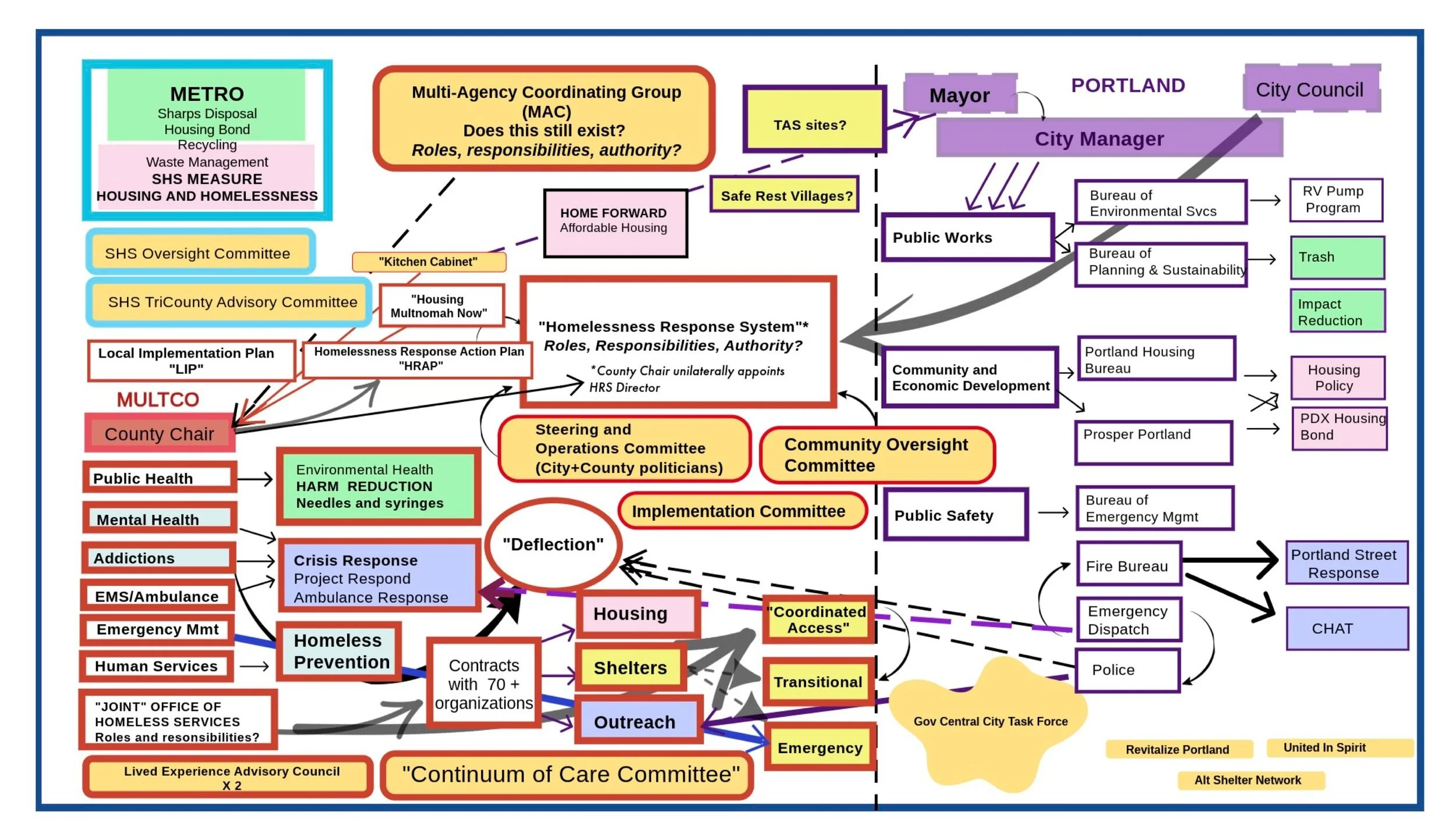
Report #2: A Flood of Money/A Dysfunctional System
Report #2, A Flood of Money/A Dysfunctional System, analyses the incoherence of the current system to address homelessness in Multnomah County. And why, despite the expenditure of huge amounts to date, this system has achieved poor results and the number of homeless keeps rising.
At Portland Voice, we are working to develop an accurate number for the cost of homelessness in Multnomah County. We welcome feedback from our readers to continue to refine these numbers.

Report #1: Ending Homelessness Requires Good Data
Report #1: Despite spending hundreds of millions of dollars annually on homelessness in Portland and Multnomah County, no one is satisfied with the results. A major cause of this is the lack of useful data.